Rail and Train Filming Locations in Western Maryland
From the massive steam engines of the Western Maryland Scenic Railroad to the industrial grit of the CSX Cumberland Terminal, this region offers the most authentic rail cinematography in the Mid-Atlantic.
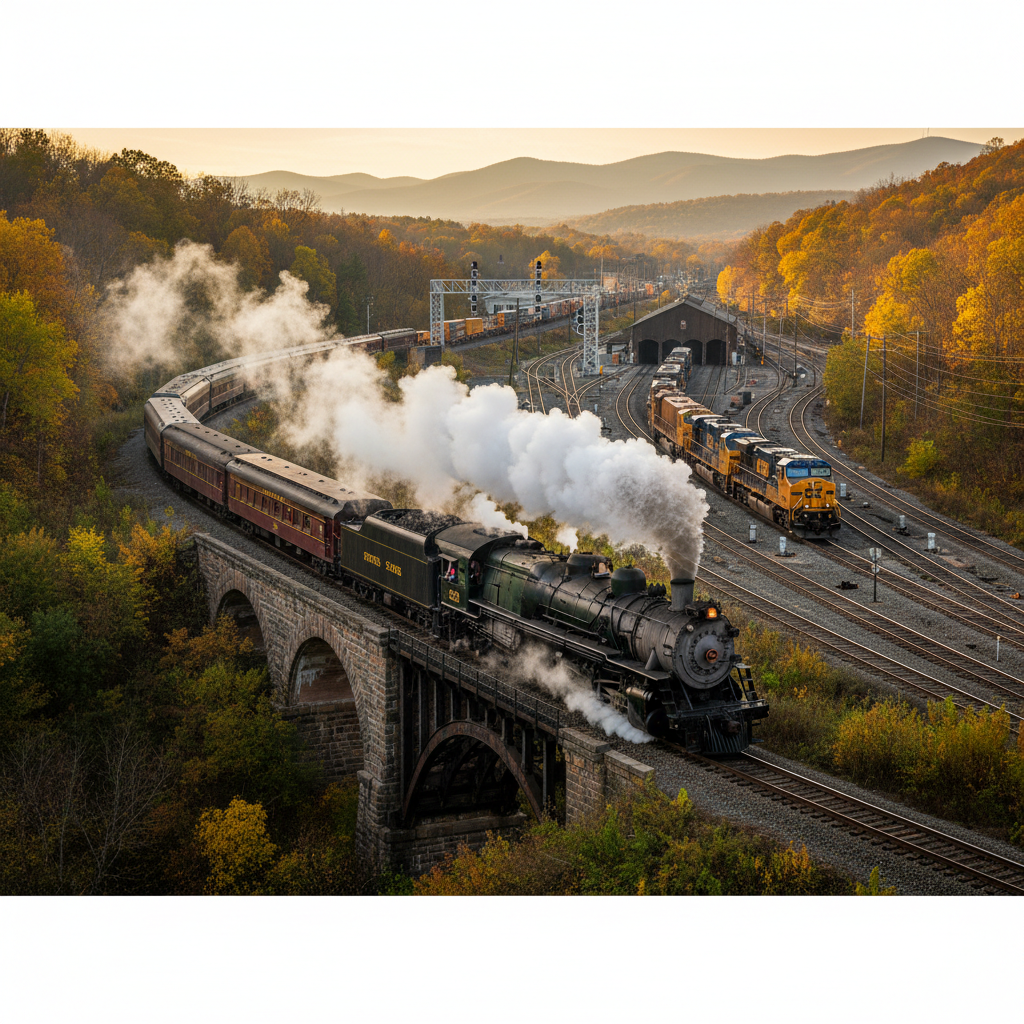
The Gateway to the West: Rail Infrastructure in Western Maryland
For filmmakers, Cumberland isn't just a destination; it’s a logistical nerve center. Historically known as "Where the South terminates and the West begins," this region offers a dense concentration of rail assets that are impossible to replicate on a studio backlot. From the heavy-duty Class I mainlines carrying high-speed freight to preserved heritage lines that feel untouched by the 21st century, the Western Maryland rail landscape serves as an authentic backdrop for period pieces, industrial thrillers, and Americana-focused documentaries.
When you film in Allegany and Garrett Counties, you are working with a topography defined by the Allegheny Front. The rail lines here don't run straight; they snake through deep river cuts, hug the banks of the North Branch Potomac, and bridge gap after gap in the mountains. This provides cinematographers with natural height, dramatic curves, and a sense of scale that makes every frame look larger than life.
Historic Stations and Heritage Rail Assets
The centerpiece of rail filming in the region is the Western Maryland Scenic Railroad (WMSR). Operating out of the 1913 Western Maryland Railway Station in downtown Cumberland, this line offers incredible flexibility for production. The track runs from Cumberland to Frostburg, climbing through the "Narrows"—a dramatic water gap between Wills Mountain and Haystack Mountain.
Key features for scouts include:
- Active Steam and Diesel Locomotives: Access to restored power units, including the massive 1309 Baldwin 2-6-6-2.
- Period Rolling Stock: vintage coaches and freight cars that can be dressed for various eras between 1920 and 1970.
- The Helmstetter’s Curve: A world-renowned horseshoe curve near LaVale that allows for panoramic wide shots of a train against the backdrop of the Allegheny Mountains.
- The Brush Tunnel: A 914-foot tunnel that accommodates both the railroad and the Great Allegheny Passage (GAP) trail, ideal for suspense sequences or period atmospheric shots.
If your script calls for a more desolate, industrial, or abandoned feel, the spur lines running through Lonaconing and the George’s Creek valley offer weathered textures and rusted steel that capture the gritty reality of the Appalachian coal heritage.
CSX Mainlines and Industrial Vistas
While heritage rail provides the period look, the CSX Cumberland Terminal represents the modern industrial powerhouse. This is one of the most significant classification yards on the East Coast. While filming directly on active Class I property requires extensive corporate clearance and strict safety protocols, the surrounding geography offers countless "look-ins" from public land and adjacent properties.
The viaducts over Cumberland and the elevated tracks passing through town allow for urban rail shots that feel like a mid-century cityscape. Further west, as the tracks climb toward Big Savage Mountain and pass through the rugged terrain of Garrett County near Oakland, the vibe shifts to remote timber and coal country. The 1884 Oakland B&O Railroad Station stands as one of the most distinctive examples of Queen Anne-style rail architecture in the country, providing a picturesque, small-town arrival or departure point.
Practical Logistics for Rail Productions
Cumberland serves as a strategic base camp for any Western Maryland production. Located approximately 2 hours from Washington D.C. and Baltimore, and 2.5 hours from Pittsburgh, the region is highly accessible for Tier 1 crew and equipment rentals.
Managing a rail-heavy shoot requires specific logistical support. Our production support team can help facilitate conversations with local authorities and land owners. While railroad companies have their own North American safety standards and insurance requirements, we provide the local boots-on-the-ground knowledge to help you find the right contact.
For gear and local hiring, you can browse the directory to find regional crew who understand the terrain and the weather patterns of the Allegheny plateau. Whether you need a local site coordinator or a grip truck that can navigate the narrow access roads along the C&O Canal, Western Maryland’s infrastructure is built to handle the load. Make sure to consult our filming guide for more on permitting and local tax incentives through the Maryland Film Office.
Multi-Modal Locations: Rail, River, and Road
One of the unique visual advantages of filming here is the "transportation corridor" effect. In places like the Cumberland Narrows or along the Potomac near Cresaptown, you can often frame a shot that includes a rail line, a river, and a historic roadway or trail like the C&O Canal towpath all in a single wide. This layering of infrastructure creates a deep, complex frame that is quintessential to the American Northeast experience.
From the high-elevation crossovers near the Eastern Continental Divide to the subterranean feel of the regional tunnels, Western Maryland offers rail locations that are as versatile as they are cinematic.
Frequently asked questions
How do I get permission to film on or near active railroad tracks?
For heritage lines like the Western Maryland Scenic Railroad, we can put you in touch with their operations team. For active Class I freight lines (CSX), you will need to coordinate through their corporate film office. We recommend starting this process at least 8-12 weeks in advance due to safety and insurance requirements.
Are there vintage steam locomotives available for filming?
Yes. The Western Maryland Scenic Railroad maintains a fleet of vintage steam and diesel-electric locomotives, along with mid-century passenger cars and freight equipment specifically suited for period-accurate productions.
What are the best historic train stations for a period 'arrival' scene?
The Western Maryland Railway Station in Cumberland and the B&O Station in Oakland are the primary historic hubs. Both are well-preserved and offer distinct architectural styles (early 20th-century brick vs. 19th-century Queen Anne).
Can I film trains from a distance without being on railroad property?
There are numerous public overlooks, bridges, and the Great Allegheny Passage (GAP) trail, which runs parallel to the tracks for miles. This allows for high-angle and tracking shots without the need for complex railroad property permits.
Does Western Maryland offer any locations that look like other regions?
Cumberland frequently serves as a double for industrial Midwest cities (like Pittsburgh or Cleveland) or mountainous European regions. The 'Narrows' can often pass for the Pacific Northwest or the Alps with the right color grading.
What is the best time of year to shoot rail footage in the mountains?
Western Maryland sees true four-season weather. Winter provides dramatic snow-covered mountain rail shots, but be prepared for rapid changes in visibility and temperature on Big Savage Mountain. Fall foliage is peak for visuals but also the busiest time for local tourism.
See more in the directory or submit a production request.