High-Altitude Views: Mountain Scenic Drives for Film in Western Maryland
From the limestone cliffs of The Narrows to the fog-drenched ridges of Big Savage Mountain, Western Maryland offers the most dramatic road locations in the Mid-Atlantic.
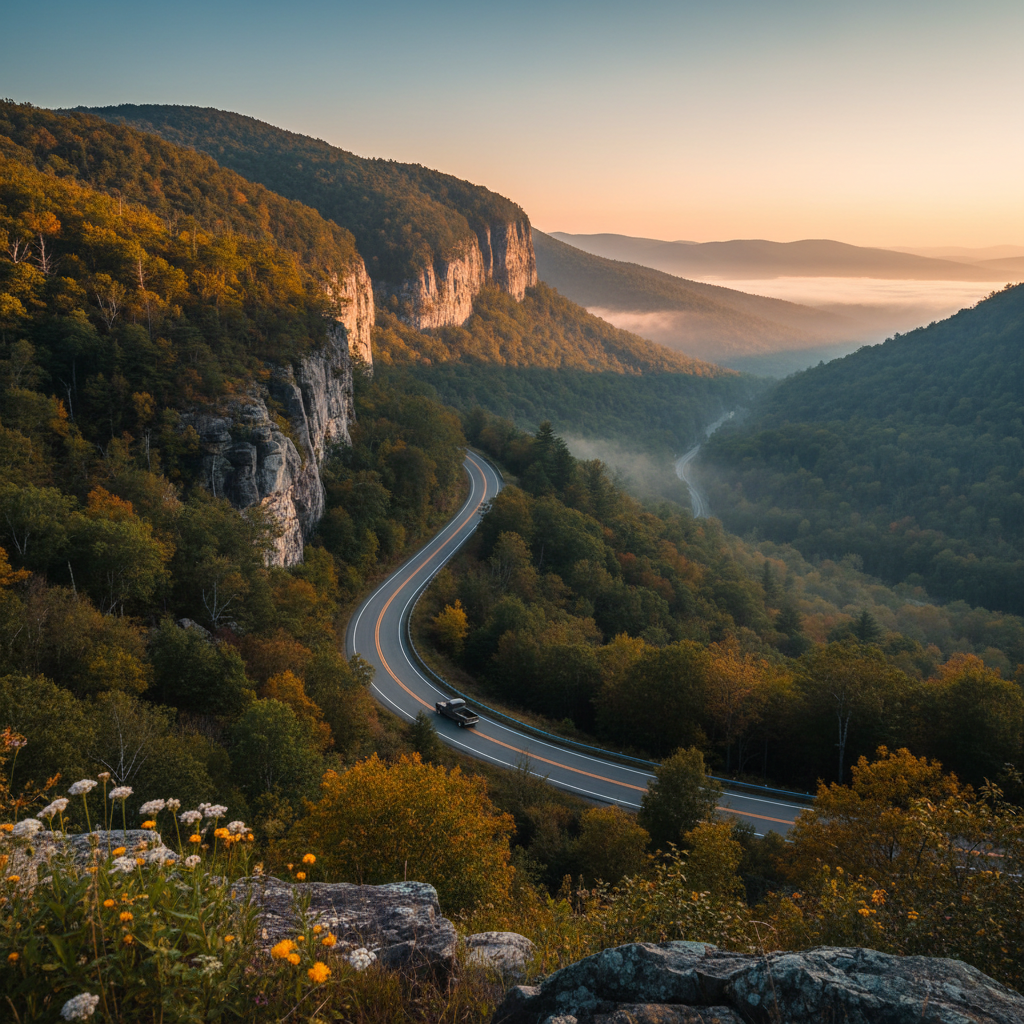
The High Terrain: Scouting the Allegheny Front
Western Maryland offers a dramatic shift in elevation that you won't find on the I-95 corridor. For productions seeking winding mountain passes, hairpin turns, and expansive overlooks, the geography surrounding Cumberland and Frostburg serves as a prime base camp. Within a 20-minute drive of downtown Cumberland, you can transition from an industrial river valley to the crest of Big Savage Mountain.
The region is defined by the Allegheny Front, where the landscape breaks into long, parallel ridges. This provides filmmakers with "the long look"—vistas that stretch across multiple states. Whether you are shooting a period piece requiring untouched forested horizons or a high-end car commercial needing pristine asphalt and steep grades, the access here is unparalleled for the Mid-Atlantic. Being roughly two hours from DC and Baltimore and 2.5 hours from Pittsburgh makes this the most accessible "high mountain" terrain for East Coast crews.
Key Routes for Motion and Beauty Shots
When scouting for scenic drives, several specific corridors offer distinct visual identities:
- Scenic US 40 (The National Road): Stretching from LaVale through Frostburg and out toward Garrett County, this route offers a mix of historic stone bridges, 19th-century architecture, and steep climbs. The stretch known as "The Narrows" near Wills Mountain provides a towering limestone gorge backdrop that feels more like the Rockies than the Appalachians.
- MD Route 36 (The Patch Road): Running through the Georges Creek Valley, this route connects Frostburg to Lonaconing and Westernport. It offers a gritty, authentic "coal country" aesthetic, passing through former mining towns with steep hillsides and terraced housing. It is ideal for narrative projects seeking a grounded, blue-collar atmosphere.
- Western Maryland Scenic Railroad Corridor: While not a road for cars, the parallel access points along the tracks from Cumberland to Frostburg offer dramatic cliffside views and deep forest canopy, perfect for tracking shots or period-accurate transport scenes.
If you are looking for specific locations or property owners along these routes, check our directory for local contacts and site leads.
The Practicalities of Mountain Production
Operating on mountain roads requires more than just a good scout; it requires an understanding of local logistics. Unlike the flatter coastal regions, Western Maryland weather can shift rapidly. A clear day in Cumberland might be a complete white-out on Big Savage Mountain.
The infrastructure in Allegany and Garrett counties is built to handle heavy transport. Wide shoulders on certain stretches of the National Road allow for easier tech-vehicle staging, though many of the more "cinematic" backroads are narrow with limited pull-outs. Coordinating with local law enforcement for intermittent traffic control (ITC) is a standard process here. Our filming guide covers the basics of permitting and coordination with county officials to ensure your rolling shots are legal and safe.
Infrastructure in Cumberland and Frostburg supports mid-to-large scale units. There are ample staging areas in industrial parks and large parking lots near the Great Allegheny Passage trailheads. Local lodging and catering are accustomed to the needs of travelers, providing a reliable home base for multi-day shoots.
Seasonal Transformations and Light
The aesthetic of these drives changes its DNA every three months.
- Winter: The "snow belt" starts just west of Frostburg. You can find deep snow and ice-covered pines in January and February, providing a stark, cold look that is difficult to replicate further south.
- Spring/Summer: Deep, saturated greens and heavy fog in the valleys near the Potomac River and the C&O Canal.
- Autumn: This is peak season. The elevation changes mean the "leaf peeping" window is extended as the color moves down the mountains over several weeks.
For productions needing to move fast, we recommend starting your logistics planning early. You can submit a request to get connected with local scouts who know the specific turn-arounds, sun angles, and private overlooks that don't appear on a standard GPS. Whether you're filming a chase scene on a ridge or a quiet character moment overlooking Deep Creek Lake, Western Maryland delivers the scale.
Frequently asked questions
Are there grip and electric rentals nearby?
While there are no major equipment rental houses in Cumberland, we are centrally located between Pittsburgh, DC, and Baltimore. Most productions bring in G&E packages from those hubs. However, local contractors often have heavy machinery, generators, and specialized mountain transport available.
How difficult is it to get road closure permits for rolling shots?
Permitting for county roads is generally straightforward and low-cost. Filming on State Highways (like Scenic 40) requires coordination with the Maryland State Highway Administration (MDOT SHA). We recommend allowing at least 3-4 weeks for state-level road closures or ITC permits.
Can I find local crew for a mountain shoot?
Yes. The region has experienced local crew across several departments, including location scouts, PAs, and art department swing. For specialized technical positions, many crews draw from the nearby metropolitan hubs.
What are the weather considerations for high-elevation shoots?
Big Savage Mountain and the Allegheny Front are prone to sudden fog and higher wind speeds than the valleys. In winter, snow tires or 4WD are mandatory for many of the backroads around Garrett County and western Allegany County.
What is the lodging capacity for a medium-sized crew?
Cumberland and Frostburg offer a variety of hotel options, from standard chains to historic inns. For larger crews, there are several locations capable of housing 50+ people with ease, including mountain resorts further west toward Deep Creek Lake.
See more in the directory or submit a production request.