Historic Downtown Filming Locations in Western Maryland
Bridge the gap between gritty industrial history and breathtaking mountain vistas with Film Cumberland’s guide to the region’s premier filming sites.
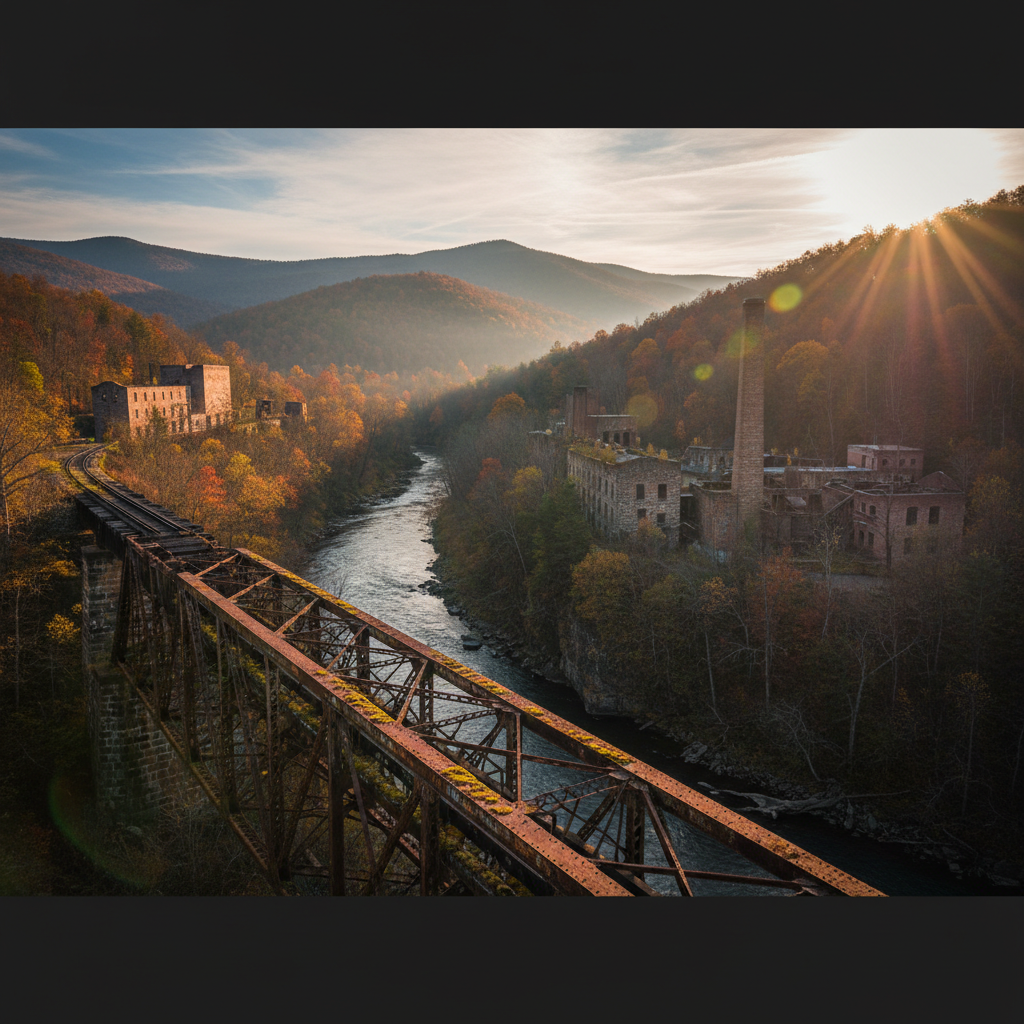
The Visual Identity of Historic Western Maryland
When you scout the Cumberland area, you aren't just looking at "small-town America." You are looking at a specific layer of industrial history preserved by the geography of the Allegheny Mountains. Cumberland and Frostburg offer a dense, brick-and-stone architectural aesthetic that serves as a stand-in for early 20th-century Chicago, East Coast industrial hubs, or even European mountain villages.
The topography of Allegany County creates a natural "bowl" for downtown Cumberland, framed by the looming presence of Wills Mountain and the famous Cumberland Narrows. This gives filmmakers a sense of scale and enclosure that you won't find in the flatter parts of the Atlantic tidewater. For productions coming from DC, Baltimore, or Pittsburgh, this is the most accessible high-mountain urban environment in the Mid-Atlantic.
Downtown Cumberland: The Queen City Look
Cumberland’s historic core is dominated by Queen City Gothic and Victorian architecture. The pedestrian mall along Baltimore Street provides a controllable environment for period pieces, featuring ornate facades that haven't changed since the mid-1900s. Unlike many modern cities, the sightlines here are remarkably clean of glass skyscrapers, allowing for 360-degree shots that maintain period integrity.
Nearby, the Western Maryland Railway Station and the terminus of the C&O Canal provide immediate access to heavy industrial textures—iron bridges, cobblestone paths, and the scenic rail lines that snake through the Potomac valley. If your script requires a transport hub from the 1920s through the 1950s, the infrastructure here is largely intact. You can view specific location types in our location directory to see how these sites have been utilized in past productions.
Frostburg and the High Plateau
Climbing the Allegheny Front brings you to Frostburg. Situated at a higher elevation, this town offers a different palette: narrow streets, steep hills, and a classic "Main Street" feel that leans into the collegiate and the Appalachian. The weather here is a factor—Frostburg often sees snow when the rest of the state is dry, making it a prime destination for winter-set narratives without the logistical nightmare of high-latitude northern shoots.
Beyond the town limits, you are minutes away from the Big Savage Mountain trailheads and the Great Allegheny Passage. This allows a production to base its crew in a historic downtown hotel while being only 15 minutes away from deep-woods terrain or massive limestone cliffs. For logistics and permitting details in these varied zones, refer to our Western Maryland filming guide.
Logistical Infrastructure in Allegany and Garrett
Filming in Western Maryland doesn't mean hauling every single piece of gear from the coast. While we are roughly 2.5 hours from Pittsburgh and 2 hours from the DC/Baltimore beltway, there is a growing local ecosystem of support. From catering companies used to feeding large crews to local equipment rentals and grip support, the region is built for industrial-scale operations.
The proximity of the regional airport and the ease of parking in towns like Lonaconing or Oakland make this a "low-friction" filming environment. We specialize in helping out-of-town producers navigate the specific needs of the region, from traffic control on historic bridges to securing staging areas in vacant industrial lofts. If you are scouting for a specific look—be it a gritty coal-town aesthetic or an upscale lakeside retreat near Deep Creek Lake—you can submit a request to our team for personalized location assistance.
Natural Borders and Tactical Advantages
The geographic variety within a 30-mile radius of Cumberland is staggering. To the west, you have the high-altitude wetlands and forests of Garrett County. To the east, the dramatic river bends of the Potomac. The "Narrows" offer a prehistoric mountain gap that provides a cinematic backdrop for chase sequences or epic establishing shots.
Because Cumberland serves as a hub, your crew has access to high-speed internet, lodging, and modern amenities while remaining seconds away from the 19th-century aesthetic. This contrast is why the region continues to attract independent features, documentary crews, and commercial productions looking for "the mountain look" without the logistical cost of an overseas or West Coast shoot.
Frequently asked questions
How far is Cumberland from major production hubs like DC and Pittsburgh?
Cumberland is approximately 135 miles from Washington D.C. and Baltimore (about 2 hours driving via I-68/I-70) and 100 miles from Pittsburgh (about 2 hours via I-79/I-68).
Are the historic downtown areas film-friendly for street closures?
Yes, the City of Cumberland and Allegany County have a streamlined permitting process for filming on public property, including the historic Baltimore Street mall and the C&O Canal areas.
What era of architecture is most prevalent in Western Maryland?
The architecture is primarily late 19th and early 20th century, with styles ranging from Queen Anne and Italianate to Art Deco and Neoclassical, making it ideal for 1880s-1950s period pieces.
Is there sufficient lodging for a 50+ person crew?
Western Maryland has several hotels, bed and breakfasts, and long-term rental options that are experienced in hosting film crews, ranging from boutique historic stays to standard modern chains.
Can we find local catering for a features-sized crew?
Absolutely. Local towns like Cumberland, Frostburg, and Oakland offer a variety of catering services that are accustomed to high-volume orders and flexible scheduling required by production call sheets.
See more in the directory or submit a production request.