Filming Fall Foliage in Western Maryland: A Producer’s Guide
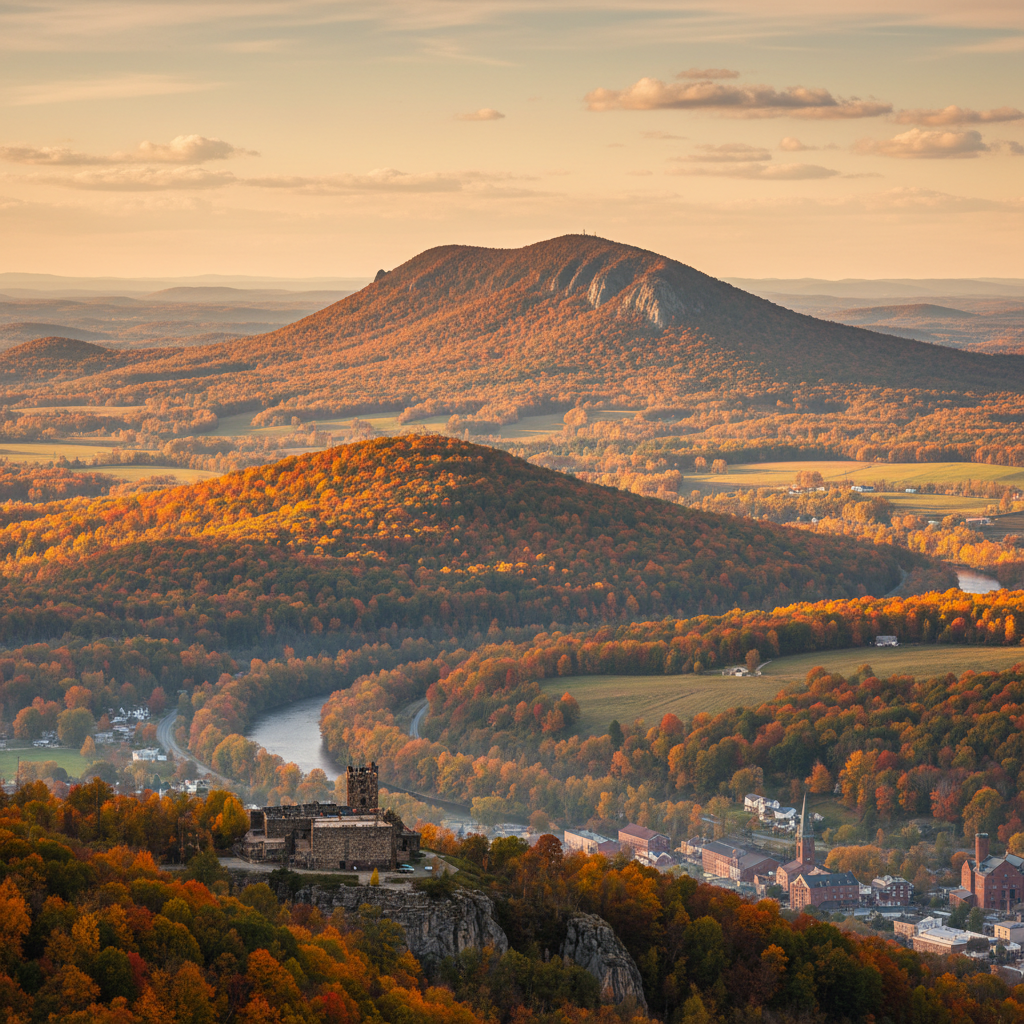
Capture the peak of autumn across the Allegheny Front, featuring the rugged terrain of Cumberland, the heights of Big Savage Mountain, and the historic textures of Allegany County.
The High-Altitude Advantage: Western Maryland’s Foliage Timeline
In Western Maryland, the fall color cycle doesn’t follow the same schedule as the I-95 corridor. Because of the elevation changes along the Allegheny Front, the color shifts start early and move fast. Garrett County, including Oakland and Deep Creek Lake, typically hits peak in early to mid-October. By the time the peak reaches Cumberland and the lower elevations of Allegany County, it’s usually later in the month.
For a production, this creates a two-to-three-week window where you can chase the peak across different terrains. You can film high-altitude ridgelines on Big Savage Mountain one week, then move down into the Potomac River valley or the historic brick aesthetics of downtown Cumberland the next. If your script requires a specific "peak" look, the regional variance allows for more flexibility than shooting in flat, coastal areas.
Diverse Textures: From Industrial Decadence to Deep Wilderness
What sets this region apart for filmmakers is the proximity of contrasting environments. Within a thirty-minute drive, you can transition from the rugged, rocky outcrops of Wills Mountain and the Narrows to the quiet, atmospheric decay of Lonaconing.
- The C&O Canal and Great Allegheny Passage (GAP): These offer miles of accessible, flat trails framed by overhanging arches of gold and crimson. The towpath provides a consistent, repeatable look for period pieces or travel sequences without the logistical headache of traffic control.
- Historic Architectural Backdrops: The neighborhood of Washington Street in Cumberland offers a "Gilded Age" residential aesthetic with massive maples lining streets of Victorian and Queen Anne homes.
- Industrial and Rural Blends: Areas like LaVale and Cresaptown provide that distinct Appalachian valley feel, where residential clusters sit at the base of steep, forested walls.
If you are looking for specific types of vistas, you can submit a request to our team for a more tailored location breakdown based on your script’s requirements.
Logistics: The Gateway to the West
Cumberland serves as the logistical hub for Western Maryland shoots. We are comfortably situated roughly 2 to 2.5 hours from Washington D.C., Baltimore, and Pittsburgh. This makes it feasible to bring in specialized keys or equipment rentals from major hubs while keeping your base of operations in a lower-cost environment.
Local infrastructure in Allegany County is built to handle crews. Between Cumberland and Frostburg, there are ample hotel blocks and long-term stay options that understand the needs of production schedules. The region is familiar with hosting large-scale events, and the local permit processes are generally straightforward compared to the bureaucratic hurdles of larger metropolitan areas. For a more detailed breakdown of local regulations and permit contacts, check our filming guide.
Shooting the Allegheny Front: Terrain and Light
Filming in the mountains requires an understanding of the "golden hour" reality here. In deep valleys like those near the Potomac or the Narrows, the sun disappears behind the ridges much earlier than the official sunset time. Conversely, the high-altitude plateaus near Garrett County offer expansive, unobstructed horizons.
The color palette here is dominated by oaks, maples, and hickories, providing a deep range of oranges and reds that hold their leaves longer than the poplars found further east. Because much of the land is state-owned forest or protected parkland, you have access to vast, uninterrupted views without modern power lines or highway infrastructure cluttering the frame. Our directory can help you find local scouts who know these ridgelines and private landowners who provide access to unique vantage points not available to the general public.
Frequently asked questions
When is the best time to film peak foliage in Western Maryland?
Peak foliage usually hits Garrett County (Oakland/Deep Creek) in early October, while Allegany County (Cumberland/Frostburg) peaks mid-to-late October. This staggered peak allows for longer shooting windows within a small geographic area.
Are permits difficult to obtain for shooting on the C&O Canal or state forest land?
Most public lands require a simple permit through the Maryland Department of Natural Resources (DNR). For city streets in Cumberland or Frostburg, the process is streamlined and local officials are generally production-friendly.
What is the local infrastructure like for crew housing and catering?
Cumberland and Frostburg offer a range of hotels and regional restaurants capable of catering to crews of 50+. For larger-scale productions, there are accessible vacant industrial spaces and warehouses available for stage builds or equipment storage.
Is there a local crew base in Allegany or Garrett County?
Yes. While we sit between Baltimore and Pittsburgh hub cities, there is a core of experienced local crew in Western Maryland, including G&E, location scouts, and production assistants.
What are the logistical challenges of moving gear in the mountain terrain?
The region is accessible via I-68. While mountain roads can be steep, most primary filming locations are reachable by standard grip trucks and honeywagons. We recommend 4WD support vehicles for specific ridgeline or deep-woods locations.
See more in the directory or submit a production request.