Film Access: Appalachian Trail & Great Allegheny Passage Maryland
Access the wild terrain of Western Maryland's ridges and rail-trails with the logistical support of a historic mountain hub.
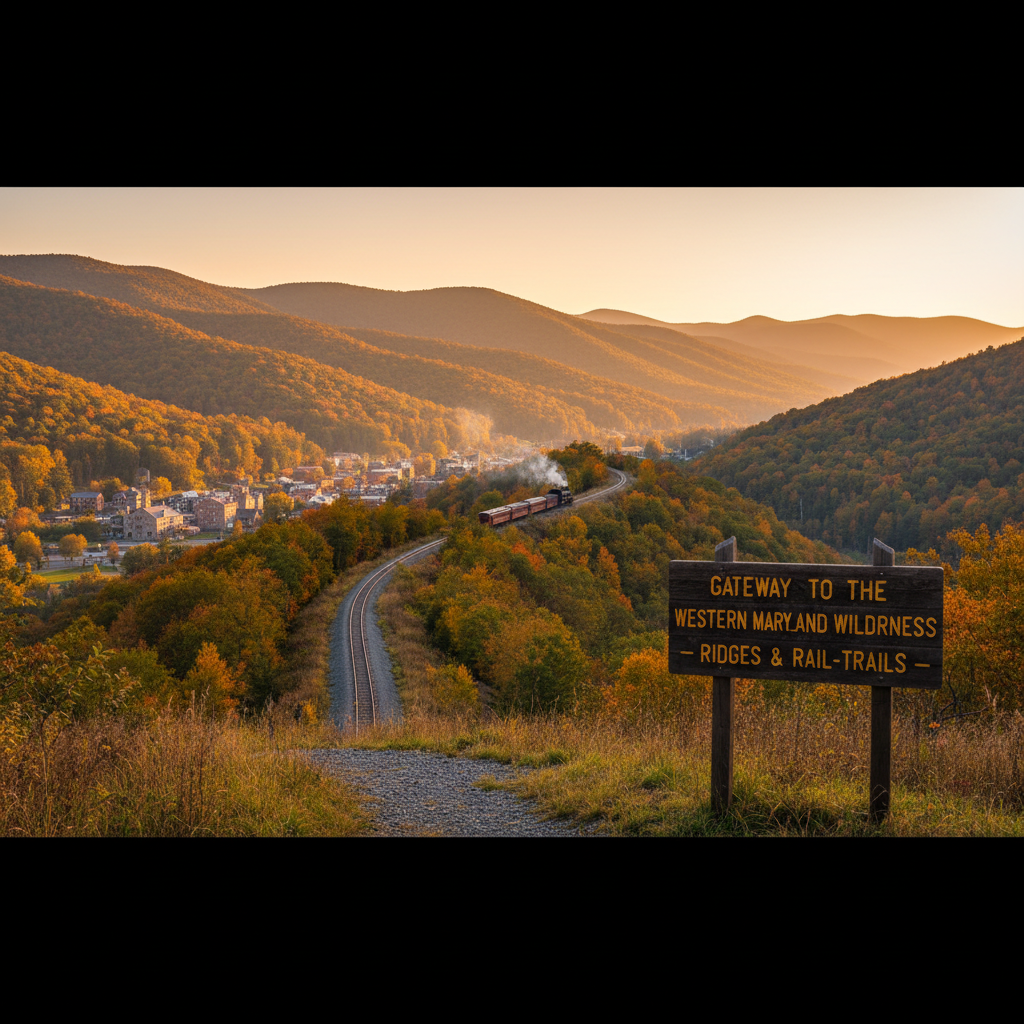
Strategic Access to the Great Allegheny Passage (GAP)
Cumberland serves as the southern terminus of the Great Allegheny Passage (GAP), a 150-mile world-class rail-trail that offers production teams unparalleled access to the Allegheny Front. Unlike rugged backcountry trails where gear must be packed in by hand, the GAP provides a wide, crushed-limestone surface that can accommodate heavy equipment carts, stabilized camera e-bikes, and small utility vehicles with the proper permitting.
From the Cumberland trailhead, the elevation climbs steadily toward the Big Savage Mountain tunnel. This section offers dramatic views of the narrow valleys and ridges that define the Appalachian landscape. For filmmakers, this means the ability to capture remote-looking forests and mountain vistas while remaining within 15-20 minutes of professional amenities in downtown Cumberland or Frostburg. The bridge crossings and sheer rock faces near the Narrows provide high-production-value backdrops for period pieces, adventure documentaries, and commercial shoots.
Filming the Appalachian Trail and High-Elevation Ridges
While the Appalachian Trail (AT) skirts the eastern edge of our immediate region, the high-elevation terrain of Allegany and Garrett Counties provides the exact visual DNA of the AT without the logistical headaches of federal wilderness restrictions found in National Parks. Locations near Lonaconing and the ridges above Oakland offer the dense hemlock forests, moss-covered boulders, and jagged outcroppings that scouts seek for "deep woods" Appalachian settings.
Our geography allows you to simulate various sections of the AT—from the rolling ridge-walks to the steep, rocky descents of the Allegheny Front. By using Western Maryland as your base, your production can access these "wild" locations via established forestry roads. This significantly reduces the time spent on "hiking in" and maximizes your shooting window. If your script calls for the iconic look of the East Coast’s most famous trail, our filming guide covers the regional terrain profiles available for your scout.
Logistical Hub: Cumberland and the Narrows
Filming in the mountains usually implies a trade-off with infrastructure, but Cumberland breaks that rule. We are a two-hour drive from Washington, D.C. and Baltimore, and about two and a half hours from Pittsburgh. This makes "The Queen City" a prime location for a production base camp.
The city sits in a natural gap between Wills Mountain and Shriver Ridge. This specific topography—known as the Narrows—creates a dramatic visual gateway that has been a focal point of American travel for centuries. Productions can secure lodging in historic hotels or modern sites in LaVale and Cresaptown, while utilizing local warehouses for staging. For specialized needs, you can submit a request to tap into our network of local coordinators who understand the seasonal weather patterns and site-specific lighting conditions of the Maryland mountains.
Four-Season Production Value
Western Maryland offers a distinct visual shift with every season, providing high-value production design for the cost of a location permit.
- Winter: The high elevations of the Allegheny Front receive significant snowfall, offering a stark, "frozen" aesthetic that is often missing from the milder coastal regions.
- Spring: Rapid green-up in the valleys near the Potomac River provides lush, vibrant foliage.
- Summer: Deep, dappled light through mature hardwood canopies creates the classic Appalachian summer look.
- Fall: Peaks in late September and early October offer world-renowned foliage, particularly around Deep Creek Lake and the higher ridges of Garrett County.
Local industry professionals are available to assist with scouting these specific micro-climates. If you are a technician or vendor based in the region, make sure to get listed in our local index to connect with incoming productions looking for boots-on-the-ground expertise. We focus on bridging the gap between the rugged outdoors and a streamlined production workflow.
Frequently asked questions
Do I need a permit to film on the Great Allegheny Passage? archaeology?
Commercial filming on the Great Allegheny Passage (GAP) typically requires a permit from the Maryland Department of Natural Resources (DNR) or local municipal authorities, depending on the specific stretch of trail. We recommend starting the process at least 3-4 weeks in advance.
Can we bring motorized camera rigs or UTVs onto the trail?
Yes. While the trail is designed for hikers and bikers, exceptions are often made for production-related UTVs or stabilized e-bikes with a permit. Standard motor vehicles are generally restricted to forest roads that intersect the trail.
What is the lodging situation for a crew of 40-50 people?
Cumberland and Frostburg offer a range of options from historic boutique hotels to standard national chains. There are also numerous mountain cabins and short-term rentals in the Deep Creek Lake area for larger crew stays.
How far is the region from the major metro hubs?
Cumberland is approximately 130 miles from D.C./Baltimore (2 hours) and 115 miles from Pittsburgh (2.25 hours), making it an easy day-trip for talent or specialized gear rentals.
What should we know about the weather for high-elevation shoots?
Western Maryland is significantly higher in elevation than the coast. Plan for temperatures to be 10-15 degrees cooler than in Baltimore. Weather on Big Savage Mountain can change rapidly, so 'weather cover' locations are a must.
See more in the directory or submit a production request.