Appalachian Mountain Filming Locations in Maryland
Scout the rugged terrain, industrial history, and vertical landscapes of Cumberland, Allegany County, and the Maryland Alleghenies.
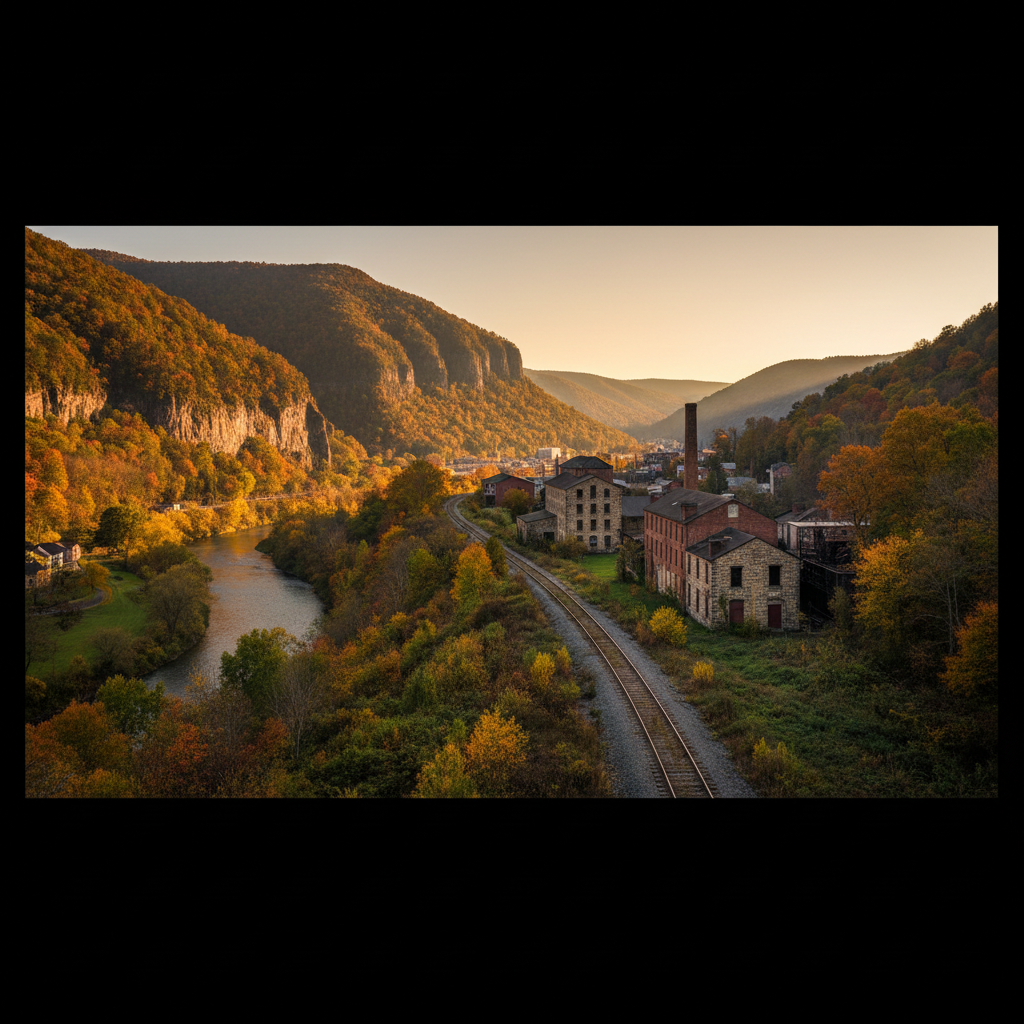
The Visual Language of the Allegheny Front
Western Maryland is defined by the high-plateau geography of the Allegheny Front. This is not the rolling green hills of the Piedmont; it is rugged, vertical, and deep. Filming in the Appalachian portion of Maryland—specifically across Allegany and Garrett Counties—gives you access to a landscape that can double for the Pacific Northwest, the Rust Belt, or remote Eastern European highlands.
Cumberland sits in a valley carved by the North Branch of the Potomac River, flanked by the massive ridge of Wills Mountain and the iconic "Narrows." This gap in the mountain provides a cinematic scale rarely found on the East Coast. If your script calls for high-elevation vistas, Big Savage Mountain and the plateau near Frostburg offer expansive views that hold snow longer than anywhere else in the state.
Industrial History and Small Town Grit
The region offers a distinct architectural timeline. Cumberland’s historic core is a mix of Victorian wealth and industrial brawn. For period pieces or gritty noir aesthetics, locations in Lonaconing and the Georges Creek Valley provide authentic, weathered textures that haven't been "beautified" out of existence. These are towns built on coal and glass, and that history is visible in every brick and weathered storefront.
Production teams often utilize our directory to scout for specific assets like abandoned industrial sites, mid-century residential streets in LaVale, or the winding railway corridors that cut through the mountains. Between the Western Maryland Scenic Railroad and the industrial remains in Cresaptown, the region is a sandbox for location scouts seeking a sense of place that feels lived-in and timeless.
Logistics: The 2-Hour Window
One of the primary advantages of filming in Cumberland is the logistical proximity to major East Coast hubs. We are roughly 130 miles from both Washington D.C. and Baltimore, and about 115 miles from Pittsburgh. This allows productions to headquarter in a low-cost environment while remaining within a half-day’s drive of union talent pools and specialized rental houses.
Infrastructure is built for scale. Unlike remote mountain locations where lodging is a struggle, the Cumberland and Frostburg corridors offer sufficient hotel capacity and short-term rentals for mid-sized crews. The terrain is accessible via I-68, a scenic but modern interstate that bisects the mountains, ensuring that grip trucks and honeywagons can reach high-elevation points without the typical "mountain pass" logistical nightmares. For specific logistical planning, review our filming guide to understand local permitting and road closure procedures.
From Deep Woods to the C&O Canal
The environmental diversity within a 30-minute radius of Cumberland is staggering. To the west, Garrett County provides the alpine feel of Deep Creek Lake and the ancient hemlock groves of Swallow Falls. To the east, the C&O Canal National Historical Park offers miles of level, riverside trails, stone aqueducts, and the hauntingly cinematic Paw Paw Tunnel.
Whether you are filming a chase sequence on the Great Allegheny Passage (GAP) or a quiet character study in a mountain cabin, the light in the Alleghenies is unique. The deep valleys create long shadows and "golden hours" that behave differently than on the coast. If you need assistance finding a specific look—from a 1950s diner to a foggy mountain pass—you can submit a request through our hub to connect with local scouts who know these ridges better than a GPS ever could.
Crew and Local Support
While many productions bring their key department heads, Western Maryland has a growing base of local grip, electric, and craft service professionals who understand the mountain terrain. Utilizing local hires isn't just a budget saver; it’s a safety requirement when dealing with unpredictable mountain weather and remote access points. From the historic downtowns to the highest peaks of the Allegheny Front, Film Cumberland is here to ensure your production captures the authentic Appalachian aesthetic with the efficiency of a tier-one market.
Frequently asked questions
What are the permit requirements for filming in Allegany County?
Permitting varies by municipality but is generally streamlined. For state parks and forests, the Maryland Film Office coordinates access. For city streets in Cumberland or Frostburg, we work directly with local mayors and police departments to facilitate closures.
What is the best time of year for mountain visuals?
Western Maryland experiences four distinct seasons. Snow is common from December through March, especially in the higher elevations near Frostburg and Oakland. Fall foliage usually peaks in mid-to-late October, providing world-class forest backdrops.
Can we film on or near the historic railroads?
Yes. The Western Maryland Scenic Railroad operates vintage steam and diesel locomotives. Additionally, many defunct rail spurs and the Great Allegheny Passage (a rail-trail) offer diverse railroad-adjacent aesthetics.
Are there local crew members available in the Cumberland area?
Yes, we have several regional professionals and vendors who work on day rates consistent with the Baltimore/DC markets but with deep knowledge of the local terrain. Check our directory for current listings.
What is the lodging capacity for a medium-sized film crew?
Cumberland and the surrounding towns have several large hotels, boutique inns, and university housing (during summer) that can accommodate crews ranging from small indies to 100+ person units.
See more in the directory or submit a production request.