Abandoned Spaces & Industrial Ruins for Film in Western Maryland
From the decaying brickwork of 19th-century rail hubs to the weathered farmsteads of the Allegheny Front, Western Maryland offers deep-seated grit and cinematic desolation within a 2-hour drive of the Maryland/DC hubs.
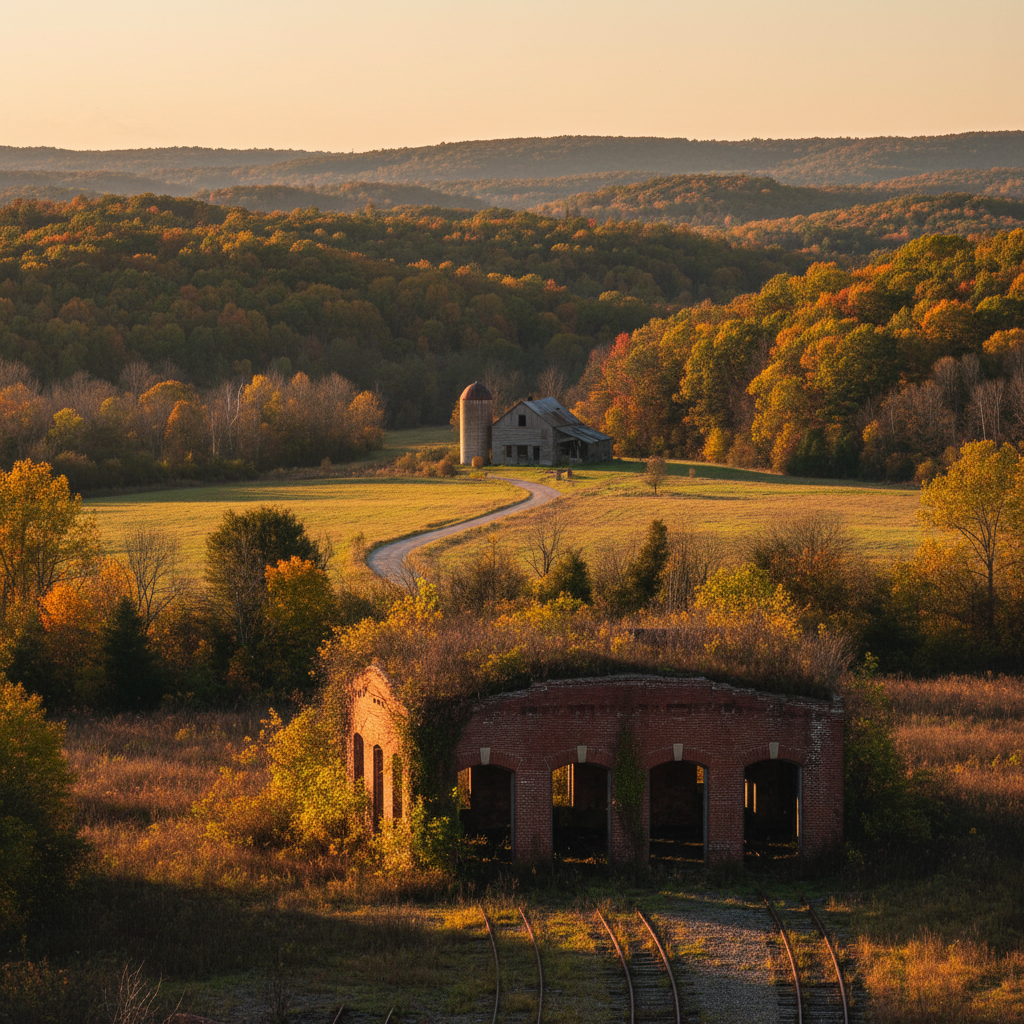
The Aesthetics of Decay: Why Filming in Western Maryland Works
For directors and production designers looking for the "rust-belt" aesthetic, post-industrial grit, or the haunting look of reclaimed nature, Western Maryland is the logical alternative to the higher costs of major metropolitan hubs. Situated just 2 hours from DC and Baltimore and 2.5 hours from Pittsburgh, the region around Cumberland and Allegany County offers a high-contrast landscape of steep mountain ridges and weathered brick architecture.
The geography here is defined by the Allegheny Front and the deep cuts of the Potomac River. Unlike the rolling hills of the Piedmont, Western Maryland features the sharp elevations of Wills Mountain and Big Savage Mountain. Between these peaks lie towns like Lonaconing and Frostburg, where the transition from 19th-century boomtown to modern rural life has left behind a rich inventory of textures: peeling lead paint, overgrown railroad sidings, and limestone structures that look like they’ve stood for centuries.
Industrial Ruins and the Rail Legacy
Cumberland was once the second-largest city in Maryland, a massive transport hub for the C&O Canal and the B&O Railroad. This legacy has left a footprint of massive brick warehouses, abandoned rail yards, and iron bridges that span the Potomac. For productions needing a cinematic backdrop for period pieces or dystopian futures, the rail infrastructure around the Narrows and the Great Allegheny Passage offers miles of usable, gritty visual real estate.
Scouts often look to the smaller patches between LaVale and Cresaptown for mid-century industrial sites that haven’t been sanitized by modern redevelopment. These spaces are often characterized by sawtooth roofs, cracked asphalt, and proximity to active heavy rail lines, providing both visual depth and an authentic soundscape. If you are looking for specific types of industrial layouts, you can submit a request to our team for a localized deep dive into available properties.
Mountain Loneliness: Rural Abandonment
Moving west toward Garrett County and Oakland, the "abandoned" look shifts from industrial to agricultural and residential. Here, the higher elevation and harsher winters of the Allegheny Plateau mean that nature reclaims structures at a faster rate. You’ll find collapsed barns and timber-frame farmhouses tucked into the valleys of Big Savage Mountain.
The high-altitude terrain around Deep Creek Lake offers a different kind of "forgotten" look—abandoned roadside motels and summer cabins that feel frozen in time. These locations work perfectly for suspense or horror genres, where the isolation of the mountain topography adds to the tension. The light here is also unique; the heavy mists that roll off the plateau in the mornings create a natural atmosphere that is difficult and expensive to replicate on a soundstage.
Logistics and Production Support in the Highlands
Finding the right ruin is one thing; filming there is another. Working in Western Maryland means you have access to a community that understands the logistics of remote shoots. Whether you are staging a scene near the Paw Paw Tunnel or out in the depths of the Savage River State Forest, you’ll need a local network to handle basecamp logistics.
While the locations may look abandoned, the support system is robust. Most productions find that utilizing our directory helps them source local heavy equipment for site prep or find regional crew who are comfortable working in rugged mountain terrain. Local government offices in Allegany and Garrett Counties are typically more accessible than those in the Baltimore-DC corridor, often making the permitting process for "difficult" locations significantly smoother. For a broader overview of how to bring your project here, check out our filming guide.
The infrastructure in downtown Cumberland and Frostburg provides the necessary anchor for these shoots. You have a hub of local restaurants, hardware suppliers, and lodging options within a 15-to-20-minute drive of even the most remote-looking sites. This allows for a "best of both worlds" production: the visual of total isolation without the logistical nightmare of a truly unreachable location.
Frequently asked questions
How difficult is it to get permits for abandoned sites?
Most abandoned industrial sites in the Cumberland area are privately owned. Permitting usually involves a standard right-of-entry agreement. For public land near the C&O Canal or state forests, permits are handled through the National Park Service or the Maryland DNR. We recommend starting the process at least 3-4 weeks out.
Can Western Maryland double for other states?
Absolutely. The region is a favorite for 'Rust Belt' and 'Appalachian' settings. The red brick architecture of Cumberland and the coal-country feel of George’s Creek look remarkably like Pennsylvania, West Virginia, or even parts of the Midwest.
What are the seasonal considerations for filming in Garrett and Allegany Counties?
Western Maryland weather is more extreme than the coast. Snow can persist in Garrett County well into April, and the 'Mountain Fog' can happen year-round. While this is great for visuals, factor in 'weather cover' days for your schedule.
Is there local crew available, or do we need to bring everyone from DC?
While we are a few hours from the major city hubs, we have a reliable base of regional G&E, camera ops, and location scouts who live work in the tri-state area. Many productions bring their HODs and hire local 'swing' crews to save on per diems.
What is the cell service / WiFi situation at remote locations?
Connectivity is excellent in town centers (Cumberland, Frostburg), but once you get into the deep valleys of the Allegheny Front or the state forests, cell service can be spotty to non-existent. We recommend satellite comms for remote basecamps.
See more in the directory or submit a production request.