Film Cumberland: The Gateway to Western Maryland Locations
From the industrial grit of the Queen City to the high-altitude vistas of the Allegheny Front, Cumberland provides a versatile, period-perfect backdrop for film and television productions in Maryland.
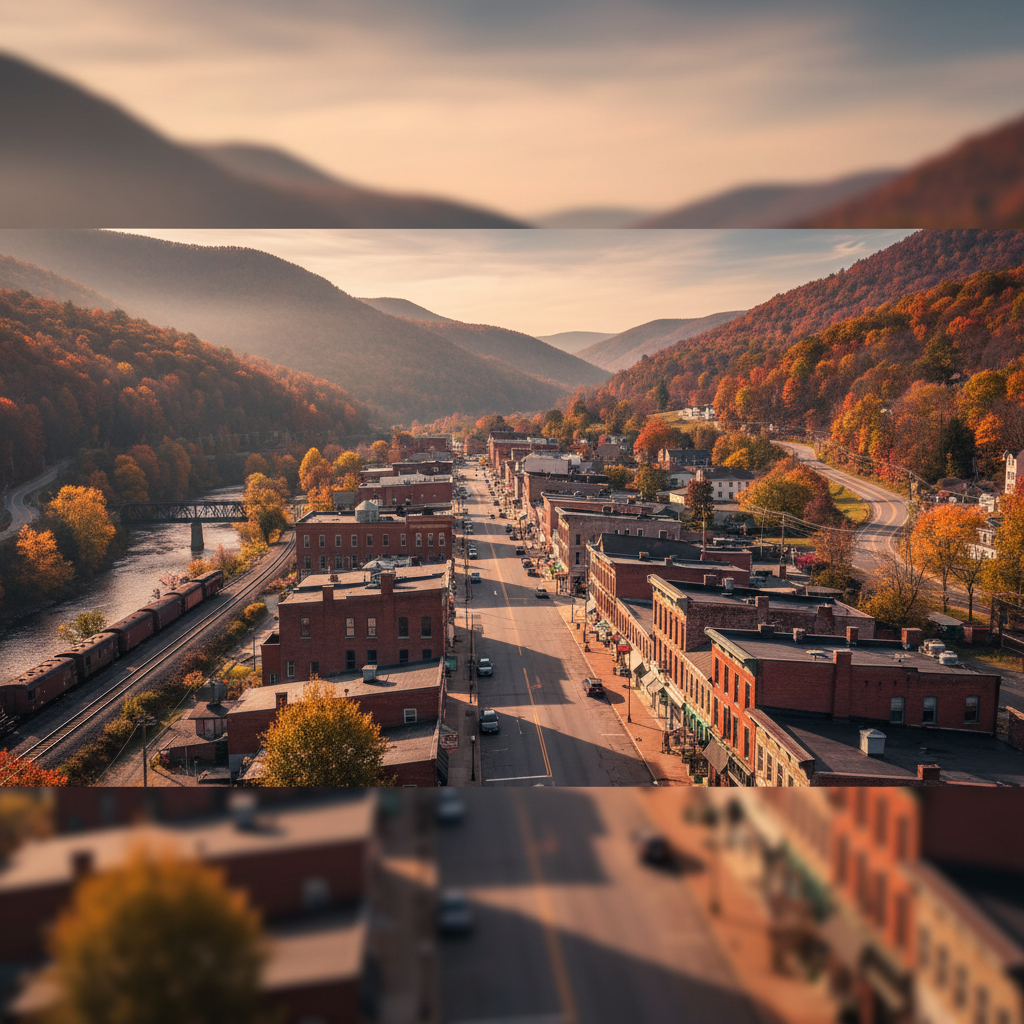
Historic Architecture and Period-Correct Streetscapes
Cumberland serves as a temporal chameleon for production. Known as the "Queen City," our downtown core offers a remarkably preserved collection of late 19th and early 20th-century architecture that can easily double for early industrial Pittsburgh, Chicago, or even London. The Washington Street Historic District features cobblestone-lined setbacks and massive Victorian mansions that provide an authentic backdrop for period dramas without the need for extensive set dressing.
What sets Cumberland apart for location scouts is the verticality. The city sits in a natural bowl created by Wills Mountain and Shriver Ridge. When you shoot down Baltimore Street, you aren't just getting storefronts; you’re getting the towering backdrop of the Allegheny Front. For productions looking to capture the grit of the Great Depression or the boom of the railroad era, the Western Maryland Railway Station and the surrounding red-brick corridors offer textures that new builds simply cannot replicate.
Rugged Terrain: The Allegheny Front and Beyond
If your script calls for wilderness that feels isolated but remains accessible, the geography surrounding Cumberland is unmatched in the Mid-Atlantic. Within a twenty-minute drive from the city center, you can be on the slopes of Big Savage Mountain or overlooking the Cumberland Narrows—a dramatic water gap with thousand-foot cliffs.
The transition from the industrial valley of Cumberland to the high-elevation forests near Frostburg and Garrett County provides a diverse range of natural looks. You’ll find dense hemlock groves, rocky outcroppings, and expansive vistas that feel like the Pacific Northwest or the deep Appalachians. For water sequences, the North Branch of the Potomac River and the terminus of the C&O Canal offers controlled environments ranging from calm basins to rocky white water. Before you head into the woods, be sure to check our filming guide for specific access requirements for state forest land.
Industrial Grit and Small-Town Americana
Beyond the historic district, Allegany County is home to authentic industrial sites that reflect the region’s heritage in coal, glass, and tires. From the weathered facades in Lonaconing to the mid-century suburban feel of LaVale and Cresaptown, we can host contemporary stories that require a "Main Street, USA" aesthetic that hasn't been polished into a tourist trap.
The Great Allegheny Passage (GAP) trail and the Western Maryland Scenic Railroad provide unique linear locations. You can film vintage locomotives on active tracks or use the rail-trail for chase sequences through tunnels and over high-trestle bridges. These assets make Cumberland a prime spot for road movies, historical documentaries, and action sequences that require significant scale.
Logistics: 2 Hours from DC, Worlds Away in Cost
Western Maryland offers a massive logistical advantage for East Coast productions. We are a straight shot on I-68—roughly 2 hours from Washington D.C. and Baltimore, and 2.5 hours from Pittsburgh. This allows productions to pull specialized regional crew and equipment from major hubs while benefiting from the significantly lower day rates and permitting costs of a smaller municipality.
Cumberland is a "film-friendly" town by necessity and culture. We understand the footprint of a Tier 1 or Tier 2 production. Parking for base camps is plentiful, and the local government is streamlined to handle street closures and pyrotechnic permits without the red tape typical of larger metropolitan areas. If you have a specific location need or a complex permit requirement, you can submit a request to our local liaison team to jumpstart the process. Managing a footprint here means your budget goes further on screen rather than into municipal fees.
Frequently asked questions
How long does it typically take to secure filming permits in Cumberland?
Cumberland operates with a streamlined permit process. Most street closures and public space uses can be approved within 7-10 business days, though we recommend starting the conversation as early as possible for complex stunts or pyrotechnics.
Do you provide location support for the surrounding Allegany and Garrett County areas?
Yes. While the city is the hub, we frequently facilitate scouts in Frostburg, the industrial corridors of Lonaconing, and the lakeside locations at Deep Creek Lake in Garrett County.
What is the travel distance from major production hubs like DC or Pittsburgh?
Cumberland is approximately 130 miles from both DC and Baltimore (about a 2-hour drive) and 100 miles from Pittsburgh (2.5 hours). It is easily accessible via I-68.
Is there a local crew base in Western Maryland?
While many specialized roles are brought in from nearby hubs, Cumberland has a reliable base of local PAs, electricians, and tradespeople experienced in production support, as well as a robust network of local catering and lodging partners.
What is the noise environment like for sync sound in the historic district?
The historic downtown is a mix of commercial and residential. While it's a functioning city, noise levels are generally low, and we can coordinate with local authorities to manage traffic for sensitive audio takes.
See more in the directory or submit a production request.