Where Can I Film Period Scenes in Maryland?
Skip the soundstage—Allegany County offers authentic 18th, 19th, and mid-20th-century locations within a 2-hour drive of the Baltimore/DC metro.
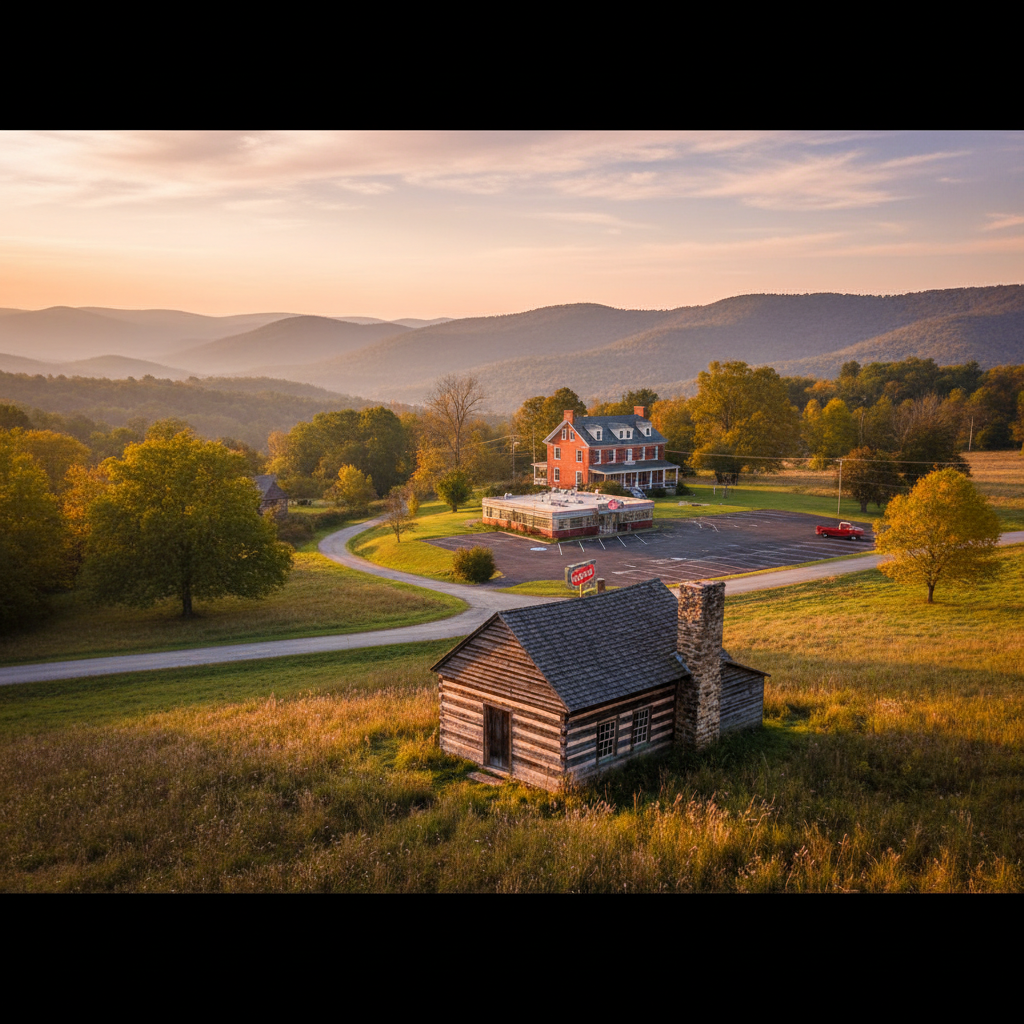
Authentic Period Locations in Allegany County
When a production needs to recreate the 1800s through the mid-20th century, Cumberland and surrounding Allegany County offer an untouched architectural density that is difficult to find in larger Maryland metros. Unlike the modernized corridors of the I-95 beltway, Western Maryland has preserved its brick-and-stone industrial character.
The city of Cumberland, once a major transportation hub for the Baltimore and Ohio (B&O) Railroad and the C&O Canal, features entire blocks of Victorian, Federal, and Art Deco architecture. The Washington Street Historic District serves as a premier location for 19th-century residential scenes, characterized by cobblestone paths and massive stone mansions. For productions looking for turn-of-the-century industrial grit, the proximity of the rail lines to vintage storefronts in Lonaconing and Frostburg provides a ready-made set for early 1900s narratives.
Industrial History and the C&O Canal
The Chesapeake and Ohio Canal National Historical Park, which terminates in Cumberland, is an essential resource for 19th-century period pieces. The canal infrastructure—including locks, towpaths, and the Western Maryland Railway Station—allows for historical accuracy without the need for extensive digital set extensions.
Just outside the city limits, the landscape shifts toward the rugged terrain of Wills Mountain and the Narrows. This geographical gap facilitated westward expansion, and many of the nearby trails and stone bridges remain unchanged since the Civil War era. If your script requires a frontier feel or mid-18th-century wilderness, the forested ridges of Big Savage Mountain and the Allegheny Front are accessible via paved roads but look entirely isolated on camera. To see how these locations fit into the regional infrastructure, check our filming guide.
Small Town America: The 1920s to the 1950s
For mid-century period work, the towns of Lonaconing and Frostburg offer "Main Street" aesthetics that require very little art direction to regress to the 1940s or 50s. Lonaconing, in particular, feels suspended in time, with vintage signage and storefronts that have avoided the glass-and-steel renovations of modern retail.
Frostburg’s elevation and collegiate architecture provide a different texture—think 1930s mountain town or a mid-century academic setting. These areas are serviced by regional crew bases from the surrounding tri-state area. Producers can find local specialized labor and equipment via the directory to help manage transport between these mountain locations. These towns are all within a 20-30 minute drive of Cumberland, making it possible to shoot two distinct "eras" in a single day.
Logistical Advantages of Western Maryland
Filming period pieces in Maryland is often a choice between the high-traffic urban centers of Baltimore or the quiet, controlled environments of the west. Cumberland sits roughly 2 hours and 15 minutes from both Washington D.C. and Baltimore, and about 2.5 hours from Pittsburgh. This makes it a feasible "hub" for a production that needs to source high-end equipment from the cities while filming in an area with lower permit hurdles and less ambient modern noise.
The terrain around Allegany and Garrett County offers significant variety, from the lakeside vistas of Deep Creek Lake to the high-plateau farmlands of Oakland. Because these areas are used to hosting seasonal visitors, the infrastructure for housing cast and crew is robust, leaning on local hotels and residential rentals. If you are scouting for a specific historical era and need boots-on-the-ground assistance to find a particular barn, bridge, or storefront, you can submit a request for location scouting assistance.
Working in the "Mountain Side of Maryland" allows for long takes and wide shots that aren't possible in the suburbs. There are no skyscrapers on the horizon here—only the literal horizon of the Appalachian mountains.
Frequently asked questions
How far is Cumberland from the major production hubs?
Cumberland is approximately 135 miles from DC and Baltimore (about 2 hours and 15 minutes) and 100 miles from Pittsburgh (about 2 hours). It is easily accessible via I-68.
Is it easier to get filming permits in Western Maryland than in Baltimore?
Yes. While the city of Cumberland has its own permit processes, many of the surrounding rural areas in Allegany County are very film-friendly with streamlined requirements compared to the coastal cities.
What are the best specific streets for 19th-century architecture?
The Washington Street Historic District in Cumberland and the main streets of Lonaconing and Frostburg are the most popular for their high density of pre-1950s buildings.
Are there operational vintage trains or canals for period shoots?
Yes, the Western Maryland Scenic Railroad operates vintage locomotives and cars, and the C&O Canal offers authentic 1800s waterways and lockhouses.
What is the best time of year to film a period piece in the Allegheny Mountains?
Late spring and early autumn are preferred for period pieces to capture the lush greenery or fall colors without the logistical challenges of mountain snow in the winter.
See more in the directory or submit a production request.