How to Scout Film Locations in Allegany County, MD
A practical guide for location scouts and producers looking to navigate the industrial landscapes, mountain towns, and rugged terrain of Western Maryland.
Understanding the Allegany County Scouting Process
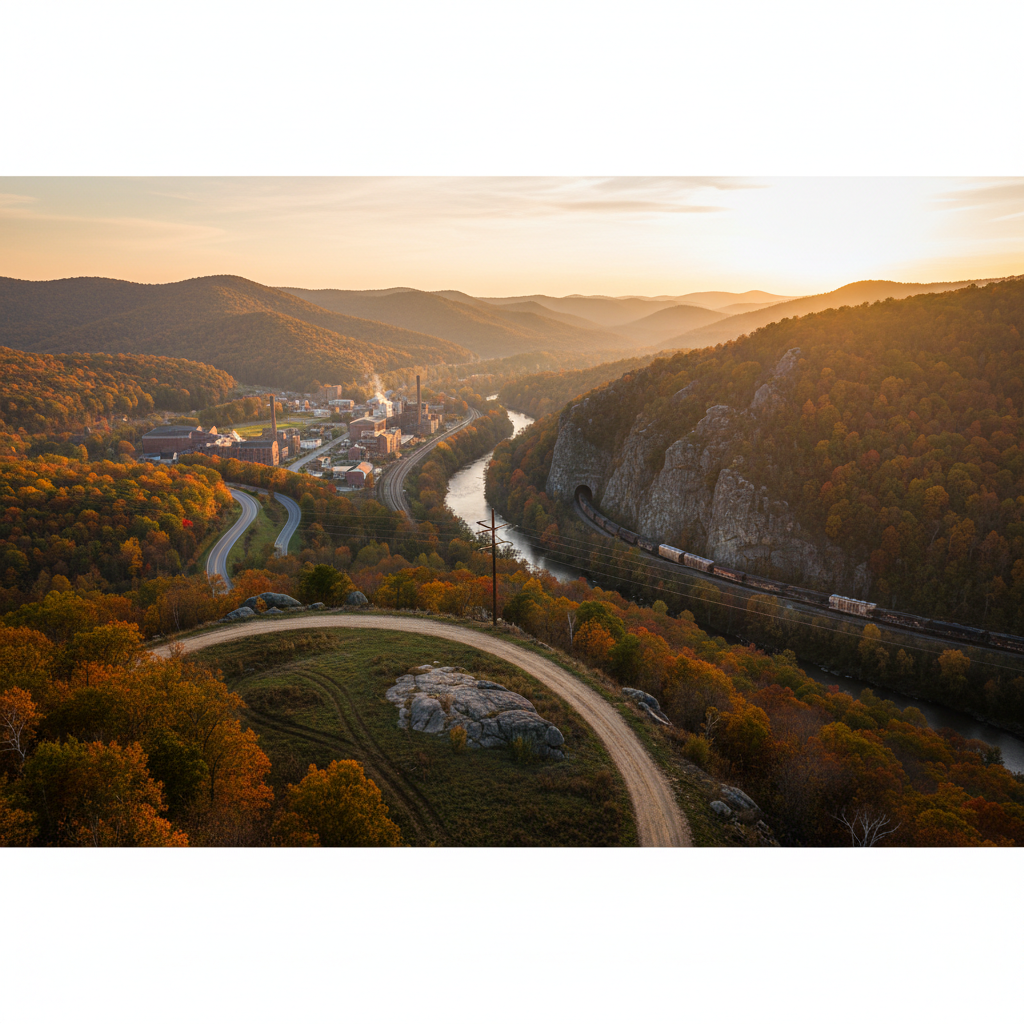
Scouting locations in Allegany County, Maryland, requires an understanding of the region's unique transition from industrial river valley to high Appalachian plateau. To begin, most productions utilize the Film Cumberland resources to identify primary sites within the city limits of Cumberland or Frostburg. Because the terrain changes rapidly—from the river-level basins of the Potomac to the ridgeline of Wills Mountain—physical scouting is essential to understand light patterns and sound interference from active rail lines.
The first step for any scout is to determine the jurisdiction. Locations within Cumberland city limits often require different coordination than those in unincorporated areas like Cresaptown or the steep inclines of Lonaconing. For broad regional searches involving state parks or historic sites like the C&O Canal, you should review our filming guide to understand which state and local agencies oversee specific land tracts.
Key Geographic Zones for Production
When scouting, it is helpful to categorize Allegany County into three distinct visual profiles:
1. Urban Industrial and Historic Rail: Cumberland offers a mix of 19th-century brick architecture, sprawling rail yards, and the Western Maryland Scenic Railroad. The "Narrow Way" through the Cumberland Narrows provides a dramatic limestone gap that serves as a natural gateway between the city and the mountains. 2. The Mountain Towns: Frostburg and Lonaconing offer high-elevation main streets. Lonaconing, in particular, is sought after for its preserved, weathered aesthetic that can double for various periods in the 20th century. 3. Wilderness and Waterways: The Potomac River and the Great Allegheny Passage (GAP) trail provide miles of accessible riverfront and forest. Sites near Big Savage Mountain offer significant elevation and deep-woods looks, while the Allegheny Front provides the dramatic "Rocky Gap" vistas.
If you are looking for specific private properties—such as mid-century warehouses or mountain cabins—you can submit a request through our hub to be connected with local property owners open to filming.
Logistics: Drive Times and Infrastructure
Allegany County is a logistical sweet spot for East Coast productions. It is roughly a 2-hour-and-15-minute drive from Washington, D.C., and Baltimore, and about 2.5 hours from Pittsburgh via I-68. This allows production offices in major hubs to scout the area in a single day trip, though overnight stays in local hotels or historic bed-and-breakfasts are recommended for multi-site technical scouts.
When scouting, consider the infrastructure available in nearby hubs like LaVale or Cumberland. These areas provide the necessary big-box retail, hardware supplies, and catering options needed to support a crew. While the terrain can be rugged, many of the most cinematic locations are surprisingly accessible via well-maintained county roads, though winter scouts should always account for heavy snowfall on Big Savage Mountain.
Finding Local Expertise and Support
You don't have to scout the Maryland panhandle alone. The region has a growing base of professionals who understand the local topography and weather patterns. From location managers who know which farmer owns a specific ridge to local fixers who can navigate municipal permits, leveraging local knowledge saves time and budget.
To find local technicians or support services, check the directory for listed professionals serving Western Maryland. If you are a local resident with a property or service to offer, we encourage you to get listed to help incoming productions find exactly what they need.
Essential Scouting Checklist for Western MD
- Check the Elevation: Lighting changes fast in the shadows of Wills Mountain. Use a sun-tracking app specifically adjusted for the steep topography.
- Acoustic Hazards: The region is a freight hub. Listen for CSX rail traffic and engine idling which can impact sync sound in the valleys.
- Cellular Dead Zones: While Cumberland and Frostburg have excellent coverage, scouting trips into the deeper parts of the George’s Creek valley or the Allegheny Front may have spotty reception. Download offline maps before leaving the main corridors.
- Seasonal Shifts: The visual difference between the lush Green Ridge State Forest in summer and the stark, snowy ridgelines in winter is extreme. Match your scout timing to your shoot window as closely as possible.
Frequently asked questions
Do I need a permit to scout in Cumberland?
Permitting varies by municipality. Cumberland and Frostburg are very film-friendly with streamlined processes. For county roads or state parks like Rocky Gap, you will need to coordinate with Allegany County or the Maryland Department of Natural Resources.
Are there hotels that can handle a full film crew?
Cumberland and LaVale offer a range of national hotel chains and local boutiques capable of housing crews of 50+. For larger-scale productions, specialized housing can be found in nearby resort areas like Deep Creek Lake in Garrett County, about 45 minutes west.
Can I scout the steam trains and rail yards?
Yes, the Western Maryland Scenic Railroad is a major production asset. They are accustomed to working with film crews, but scouting must be scheduled around their public excursion calendar.
Are high-elevation locations accessible in winter?
While generally accessible, sites on Big Savage Mountain or the higher elevations of the Allegheny Front can be snowed in or subject to heavy fog from November through March. A 4WD vehicle is recommended for winter scouting.
What is the drive time from the nearest major city?
Allegany County is less than 2.5 hours from Washington D.C., Baltimore, and Pittsburgh, making it an ideal 'zone' for crews based in any of those three major production hubs.
See more in the directory or submit a production request.