How Far is Cumberland, MD from DC, Baltimore, and Pittsburgh for Film Crews?
Cumberland is centrally located in the Mid-Atlantic, roughly 2 hours from DC and Baltimore and 2.5 hours from Pittsburgh, making it a prime location for mountain and industrial aesthetics without the coastal price tag.
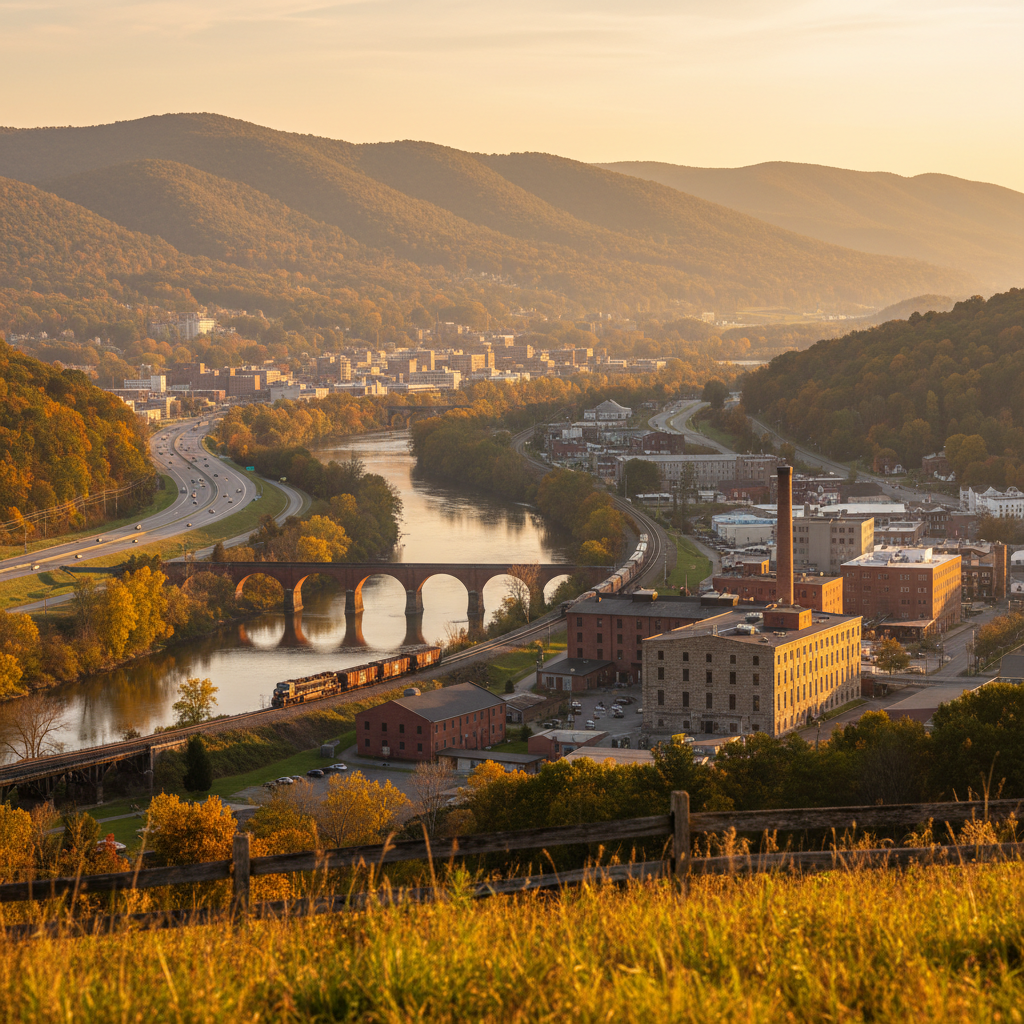
Drive Times and Distance to Cumberland, MD
Cumberland is strategically positioned as a logistical midpoint between major Mid-Atlantic and Rust Belt production hubs. For film crews coming from Washington, D.C. or Baltimore, the drive is approximately 130 miles, typically clocking in at 2 hours to 2 hours and 15 minutes depending on traffic at the I-270/I-70 split. From Pittsburgh, the drive is slightly longer at roughly 100 miles but involves navigating the winding mountain passes of the Laurel Highlands, usually taking about 2 hours and 15 minutes via I-68 and Route 40.
Because Cumberland serves as the seat of Allegany County and is the urban center for Western Maryland, it functions as a "home base" for productions looking to access the rugged terrain of the Allegheny Front. Unlike the flat coastal plains of the Eastern Shore, the drive west involves a significant elevation gain as you cross Big Savage Mountain. This proximity allows crews to scout and shoot in high-altitude environments without the transcontinental flight costs associated with the Rockies.
Accessing the Region via Major Corridors
Most production vehicles and grip trucks will arrive via Interstate 68, which runs directly through the heart of Cumberland and connects to the Pennsylvania Turnpike (I-76) and I-70. This east-west artery is well-maintained but requires drivers to be aware of the steep grades—some as high as 6%—found on Sideling Hill and Wills Mountain.
For crews moving between locations, the travel time within the region is minimal. You can get from the historic brick architecture of downtown Cumberland to the industrial textures of Lonaconing or the forested heights of Frostburg in under 20 minutes. If your production requires the deep woods or the shorelines of Deep Creek Lake in Garrett County, you are looking at an additional 45-minute drive west from the Cumberland city limits. Local infrastructure, including wide staging areas near the C&O Canal and accessible parking in LaVale and Cresaptown, makes moving a 40-foot trailer much simpler than navigating the narrow alleys of D.C. or Pittsburgh.
Logistics and Staging for Out-of-Town Crews
When bringing a crew from the city, staying in Cumberland offers a significant cost advantage over metropolitan hubs. The city provides a "hub and spoke" model for filming; production offices can be set up in the historic downtown while the actual sets are spread across the Potomac River valley or the nearby state parks.
If you are sourcing local talent to supplement your traveling heads of department, you can browse the directory to find regional technicians who understand the specific requirements of working in the Appalachian climate. Weather here can shift rapidly as systems move over the Allegheny Front, so having local support who can manage "winter weather" logistics in April is an asset. Many productions choose to base their catering and craft services in Cumberland or LaVale, utilizing local restaurants and suppliers to keep the budget local while maintaining high standards for the crew.
Why Producers Choose Western Maryland Locations
Distance is only one factor; the variety of "looks" within a 30-mile radius of Cumberland is the real draw. Within a two-hour drive of the D.C. Beltway, a location scout can find:
- Historic Urban: The 19th-century storefronts and colonial-era footprints of the downtown area.
- Industrial Decay: Former manufacturing sites in the Georges Creek Valley.
- Natural Vistas: The dramatic "Cumberland Narrows" gap between Wills Mountain and Haystack Mountain.
- Transportation Infrastructure: The Western Maryland Scenic Railroad and the Great Allegheny Passage.
For those ready to move forward with a project, we recommend you submit a request to get detailed information on specific site permissions and local logistical support. Most local municipalities are film-friendly and do not require the same level of intensive permitting paperwork as the larger cities to our east and west. For more detailed logistical breakdowns, see our comprehensive filming guide which covers seasonal lighting, typical day rates for regional support, and lodging recommendations.
Frequently asked questions
What is the average drive time for a grip truck from D.C. or Pittsburgh?
From Washington D.C. and Baltimore, it is approximately 2 to 2.5 hours. From Pittsburgh, it is roughly 2 hours and 15 minutes. All times are dependent on traffic leaving the metropolitan centers.
Are the mountain roads accessible for 53-foot production trailers?
Yes, I-68 is a major interstate designed for heavy freight. However, drivers should be briefed on the steep mountain grades (up to 6%) on Sideling Hill and Big Savage Mountain, especially in winter conditions.
What is the closest major airport for talent flying in?
There is no commercial passenger airport in Cumberland. Most out-of-state talent flies into BWI (Baltimore), IAD (Dulles), or PIT (Pittsburgh) and takes a rental car or shuttle for the final two-hour leg of the trip.
Where serves as the best 'base camp' for lodging a crew of 50+?
Downtown Cumberland offers several mid-scale hotels and boutique stays. For larger crews, there are clustered hotel options in LaVale (6 minutes away) that offer ample surface parking for production vehicles.
Is Cumberland considered within the 'local zone' for D.C.-based union crews?
Yes, while we are far enough to be a 'destination' location, many D.C. and Baltimore-based crew members are willing to work as locals or with a small travel stipend due to the easy 130-mile drive on I-70/I-68.
See more in the directory or submit a production request.