Best Mountain Locations Near DC for Filming
The Allegheny Mountains of Western Maryland offer the closest rugged, high-altitude terrain for D.C.-based productions looking for dramatic vistas, rocky gorges, and deep wilderness.
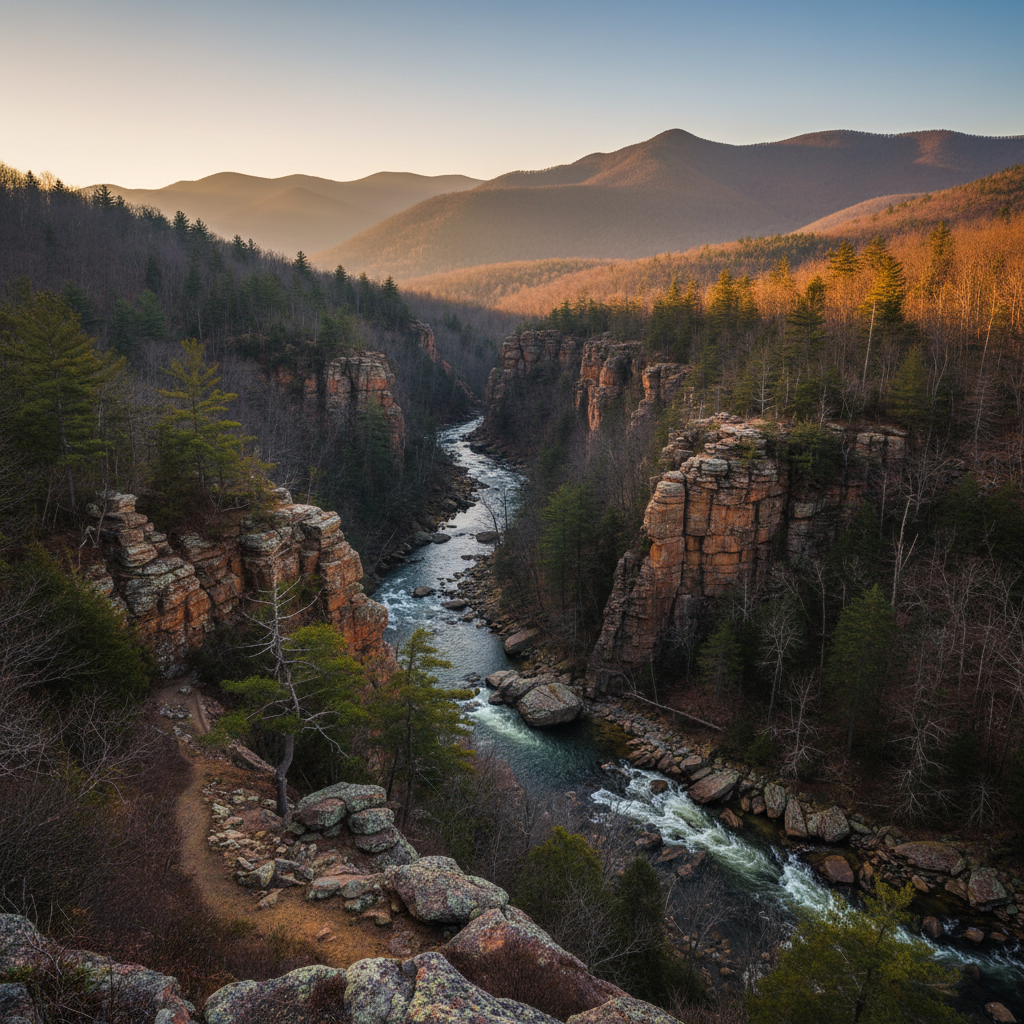
The Closest High-Altitude Terrain to the DMV
For production teams based in Washington, D.C. or Northern Virginia, finding true mountain terrain often requires a drive through the Virginia Piedmont. However, the most versatile and accessible mountain locations are found by heading northwest into the Allegheny Range of Western Maryland. Cumberland and Allegany County serve as the gateway to the Allegheny Front, offering a dramatic shift in geography just two hours from the Beltway.
Unlike the rolling hills closer to the capital, this region provides steep elevation gains, rock outcroppings, and dense hardwood forests that can double for the Pacific Northwest, the Appalachians, or remote European highlands. The transition begins at Sideling Hill and culminates in the massive ridges of Wills Mountain and Big Savage Mountain. For producers, this means you can achieve high-altitude looks without the logistics or expense of a cross-country flight.
Key Mountain Locations: From Ridges to Gorges
The geography around Cumberland is defined by the "Ridge and Valley" province. This creates a specific visual rhythm of long, parallel ridges separated by deep, forested valleys.
- Wills Mountain and The Narrows: This is perhaps the most iconic localized feature. The Wills Mountain State Park area offers sheer limestone cliffs and a 1,000-foot gorge known as "The Narrows." It provides an epic scale for drone cinematography and wide establishing shots that look nothing like the typical Mid-Atlantic landscape.
- Big Savage Mountain: Located just west of Frostburg, this ridge represents the Eastern Continental Divide. The terrain here is rugged, featuring boulder fields and wind-swept vistas. It is a primary location for projects requiring a sense of isolation or wilderness survival themes.
- The Allegheny Front: As you move toward Garrett County and the Oakland area, the plateau rises significantly. Here, you find the high-altitude bogs and coniferous forests of the Cranberry Glades variety, offering a much darker, moodier palette for thrillers or period pieces.
- The Potomac River and C&O Canal: While often associated with the flat paths of D.C., the upper Potomac in Allegany County is flanked by steep mountain walls. Shooters can capture white-water sections and rocky riverbanks that feel entirely disconnected from civilization.
Infrastructure and Logistics for Remote Shoots
Filming in the mountains usually presents a "last mile" logistical challenge. Western Maryland mitigates this through a hub-and-spoke model. While your actual frame might be a remote forest on the Great Allegheny Passage (GAP) trail, your base camp is typically less than 20 minutes from the urban centers of Cumberland or Frostburg.
These towns provide the necessary infrastructure to support a mid-to-large-scale crew. You have access to high-speed internet for dailies uploads, staging areas in historic downtown buildings, and a variety of lodging options ranging from boutique hotels to mountain cabins. If you are looking for local support personnel or specialized equipment, you should consult the directory to find regional professionals who understand the specific challenges of the mountain climate.
The drive-time is a major factor for D.C. and Baltimore productions. Most locations in Allegany County are a straight shot out I-68, making it feasible for a 2.5-hour equipment haul or crew transport. This proximity allows for "day-player" scenarios where talent or specialized crew can commute from the city if necessary, though local lodging is usually more cost-effective.
Seasonal Versatility and the Western Maryland Climate
One of the primary reasons scouts Choose the Alleghenies is the distinct seasonality. Because of the elevation, the weather patterns here differ significantly from the D.C. metro area.
- Winter: If you need snow when D.C. is merely raining, you head to Frostburg or Garrett County. The "lake effect" from the west often dumps significant snow on Big Savage Mountain and Deep Creek Lake, providing a reliable winter aesthetic from December through March.
- Autumn: The fall foliage in Western Maryland peaks two to three weeks earlier than in the capital. The hardwood forests provide a deep, saturated color palette that is ideal for commercial work or scenic backdrops.
- Spring/Summer: The high canopy of the Alleghenies provides a lush, green environment with "God rays" filtering through dense growth—perfect for fantasy or historical drama.
Before heading out, it is highly recommended to review our filming guide to understand local weather trends and permitting requirements for state forest land. If your script requires a specific environment—be it a misty mountain road or a rocky cliffside—you can submit a request to our office for location scouting assistance and municipal coordination. We can help you navigate land use agreements with both private owners and state agencies to ensure your production stays on schedule.
Frequently asked questions
How far is Cumberland and the Allegheny mountains from Washington, D.C.?
Cumberland is approximately 135 miles from Washington, D.C., which translates to a 2 to 2.5-hour drive depending on traffic and your final mountain destination. Our proximity to I-68 makes the transit straightforward for heavy grip trucks and crew vans.
Can I find Pacific Northwest-style forests near the East Coast?
Western Maryland offers several locations that can double for the PNW, specifically the high-altitude hemlock groves and mist-heavy ridges near Frostburg and Oakland (Garrett County). The dense greenery and frequent mountain fog provide that specific localized atmosphere.
Do I need permits to film on the mountains in Allegany County?
Permitting depends on the specific site. State Forests and Parks (like Savage River State Forest) require Maryland DNR permits, which typically involve a 30-day lead time. Municipal permits in towns like Cumberland or Lonaconing are often managed through the local film office and can be expedited for smaller shoots.
Are there significant weather differences between D.C. and the mountains?
Yes. While D.C. may be mild, the mountains can be 10-15 degrees colder with significantly higher wind speeds, especially on Big Savage Mountain. We advise all productions to factor in "mountain time" for gear acclimation and to ensure crew have appropriate cold-weather or waterproof gear.
Where should my crew stay when filming in Western Maryland?
Cumberland and Frostburg serve as the primary hubs. They offer a mix of national hotel chains and local historic inns. For long-term productions, there are large-scale rental properties and lodges that can accommodate entire departments in a single location.
See more in the directory or submit a production request.